Explore PREM News and Highlights
Highlight · May 15, 2020
Fort Lewis College
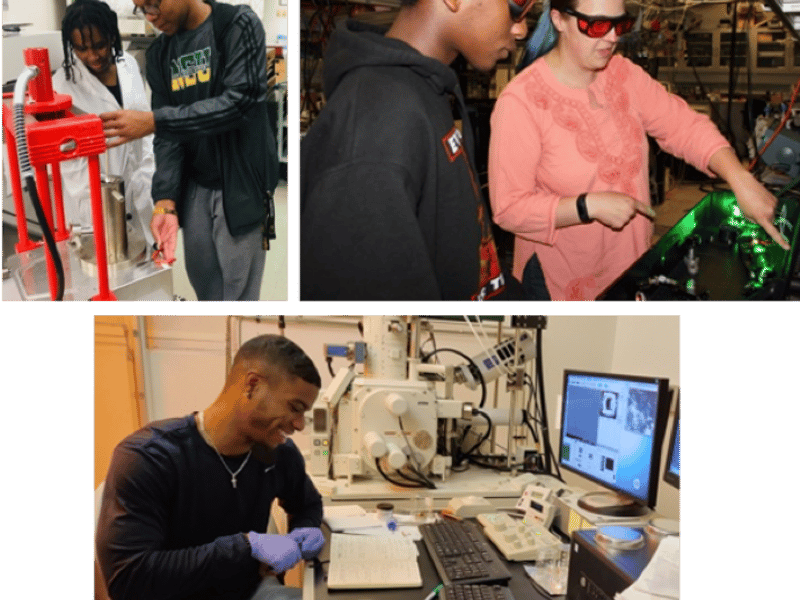
Collaborative materials characterization
Doyle Temple, Norfolk State University
PEAQS has successfully leveraged its community and resources built in year 1 to develop and characterize new materials for quantum devices and electronics.
News · Aug 15, 2019
California State University - Northridge
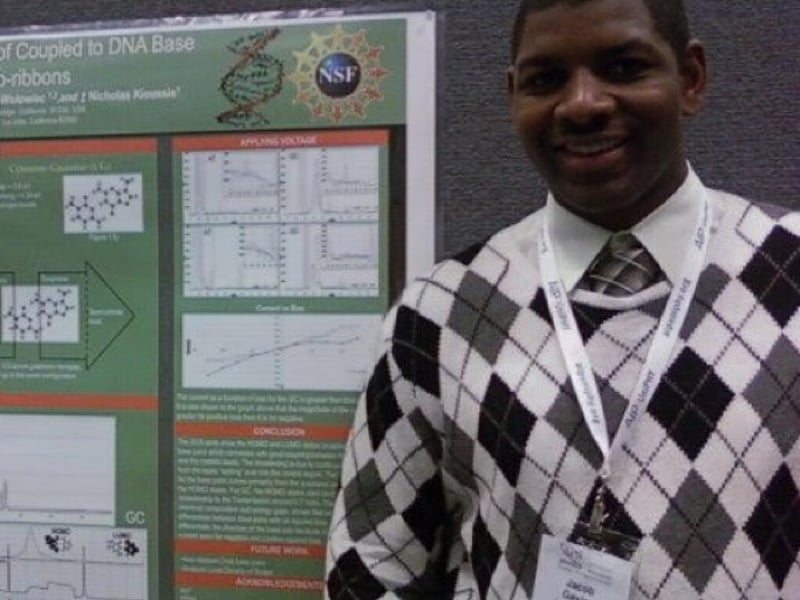
From California to Germany, PREM Alumnus Builds a Career in Quantum Materials
Divya Abhat
Jacob Gayles always thought he’d be an architect until he took a physics class in his final year of high school. It was interesting enough that when the time came to go to college, he applied to a handful of architecture programs and one physics program at California State University Northridge (CSUN). He chose to go to the latter and so began a career in science.
Highlight · Aug 6, 2019
University of Puerto Rico-Mayagüez - University of Wisconsin-Madison MRSEC
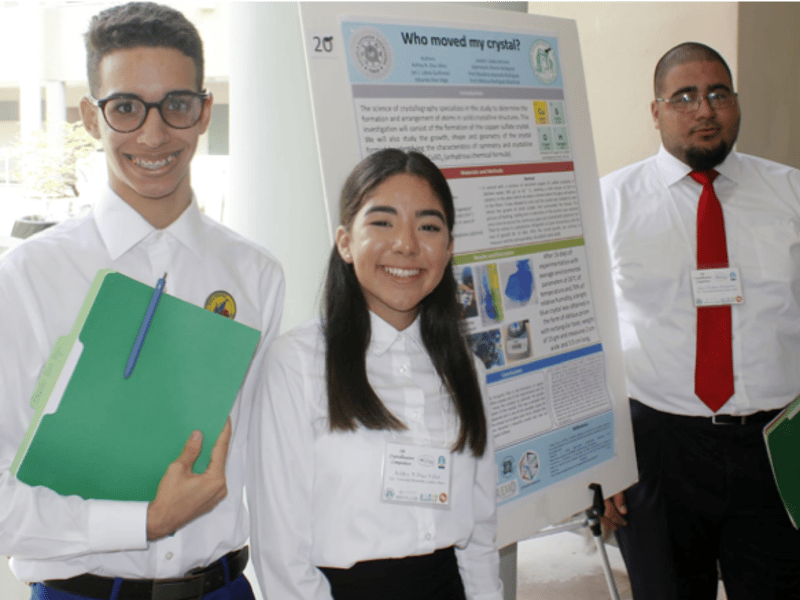
Fifth Crystallization Competition
Juan López-Garriga and Nelson Cardona-Martínez, University of Puerto Rico-Mayagüez, PR; Torsten Stelzer, University of Puerto Rico–Medical Science Campus; Vilmalí López, University of Puerto Rico–Río Piedras
The Fifth Crystallization Competition was held on June 8, 2019 at the UPRM. Sixty five high school students presented 24 posters with their results.
Highlight · Aug 6, 2019
University of Puerto Rico-Mayagüez - University of Wisconsin-Madison MRSEC
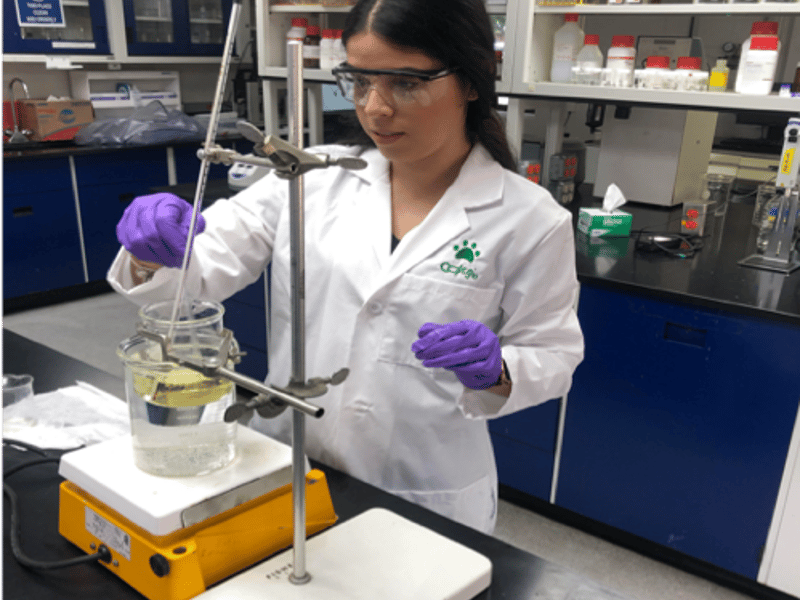
Cross-Cultural Connections: An RET Site Program with UPRM and UW
Nelson Cardona-Martínez, University of Puerto Rico-Mayagüez, PR; Anne Lynn Gillian-Daniel and Matthew D Stilwell, 2University of Wisconsin-Madison
This RET project is a collaboration between Wi(PR)2EM, the Center for a Sustainable Water, Energy, and Food Nexus, the Science on Wheels Educational Center, and the UW MRSEC.
Highlight · Jul 16, 2019
Fort Lewis College
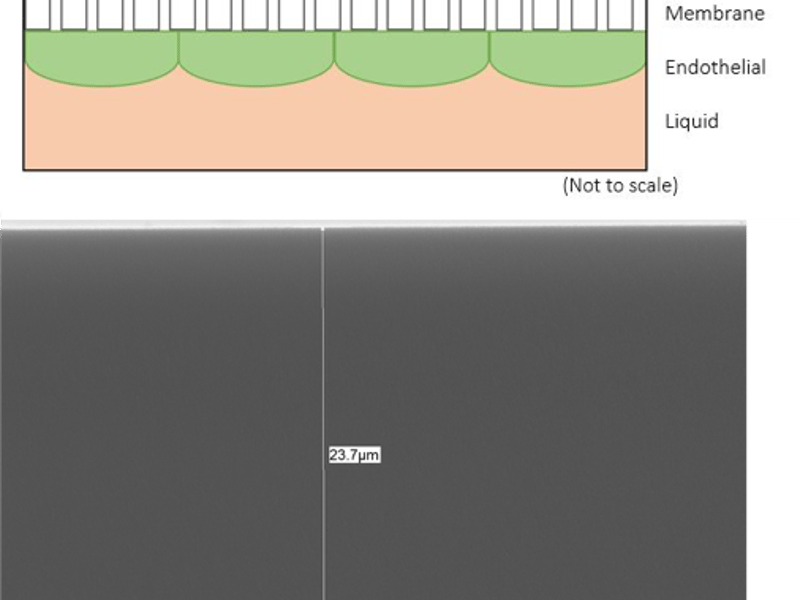
Building a sample platform for live cell imaging
Jeff Jessing, Fort Lewis College
Imaging high resolution live tissues has long been a goal to better understand the development of tissue specific disease and tissue biology. Current imaging techniques allow for live imaging, but not at high resolution or high resolution imaging, but not of living cells.
Highlight · Jul 16, 2019
Fort Lewis College
Partnership for the Education and Advancement of Quantum-and nano-Systems (PEAQS)
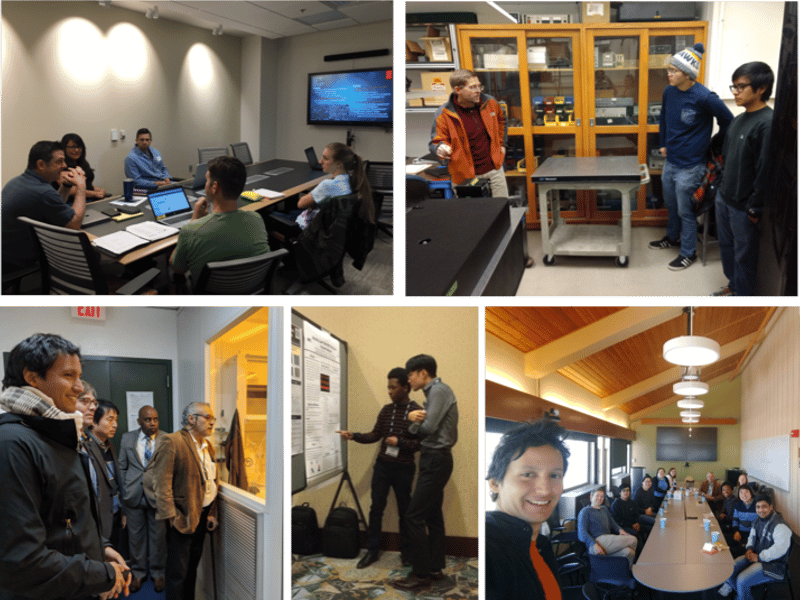
Woven throughout PEAQS are highly collaborative materials science research and education projects requiring a strong center community and confident, empowered undergraduate researchers.
Highlight · Jul 15, 2019
PREM Seed: VENTURES
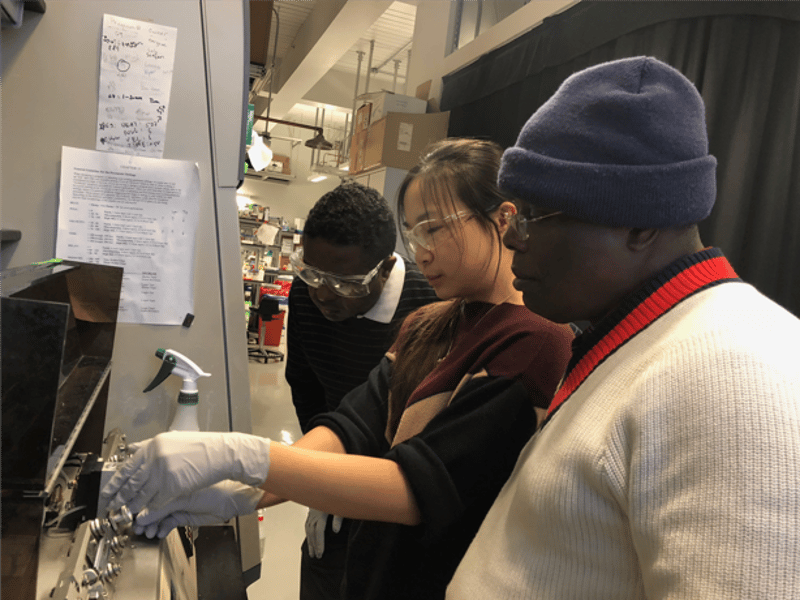
Vision for excellence at Navajo Technical University in Research and Education in STEM
Highlight · Jul 15, 2019
Developing low-cost electrochemical methods for measuring contaminants
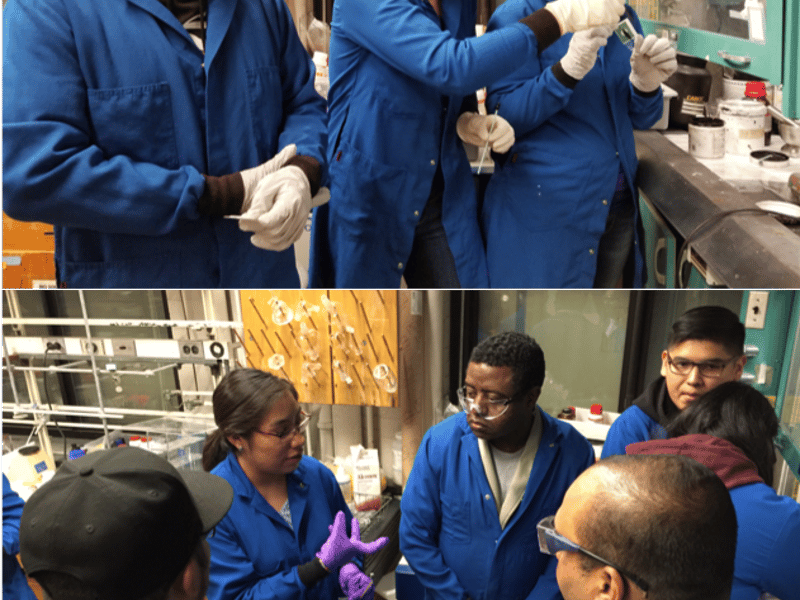
Navajo Technical University (NTU) and the Materials Research Science and Engineering Center (MRSEC) at Harvard have embarked on a partnership to engage NTU students in materials science research that can be used to address health and environment issues relevant to the Navajo Nation.
News · Jun 13, 2019
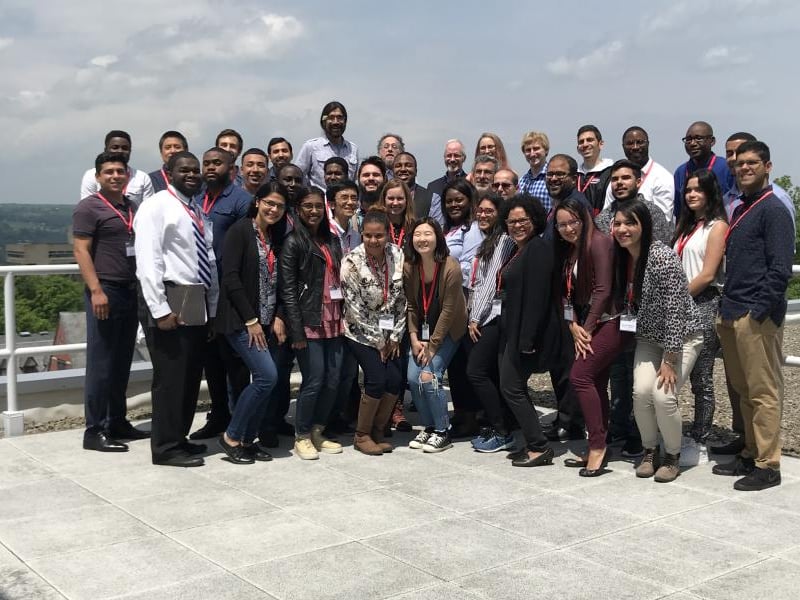
PREM Students Participate in Synchrotron Workshop
On June 4- 5, 2019, students from several PREM groups and the INCREASE consortium participated in the CHESS User’s Meeting and the associated “Synchrotron Essentials” workshop.
News · May 2, 2019
The University of Texas at El Paso
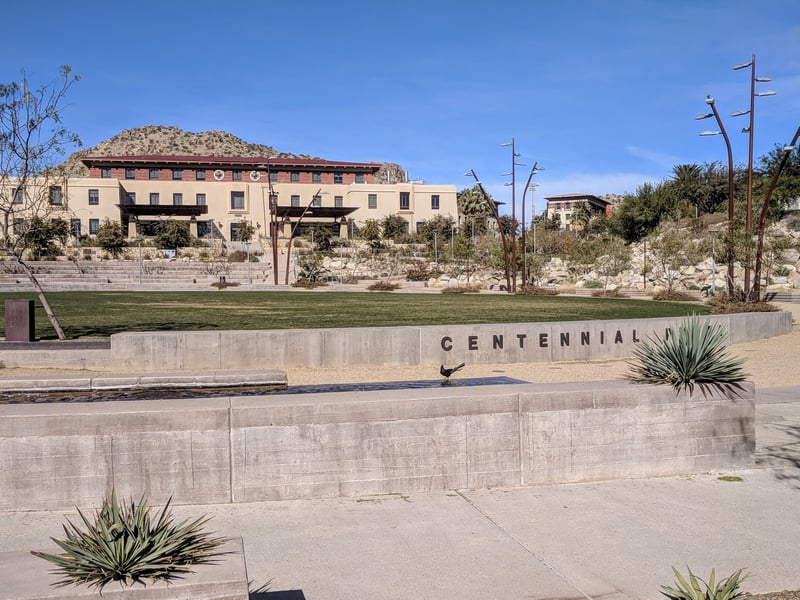
UTEP Students Receive NSF Fellowship
El Paso Herald-Post
A pair of students from The University of Texas at El Paso who will pursue research-based doctoral degrees earned fellowship offers from the National Science Foundation (NSF) Graduate Research Fellowship Program.
Showing 91 to 100 of 270