Highlights
Jan 7, 2026
California State University - Long Beach
CSULB-OSU PREM Symposium
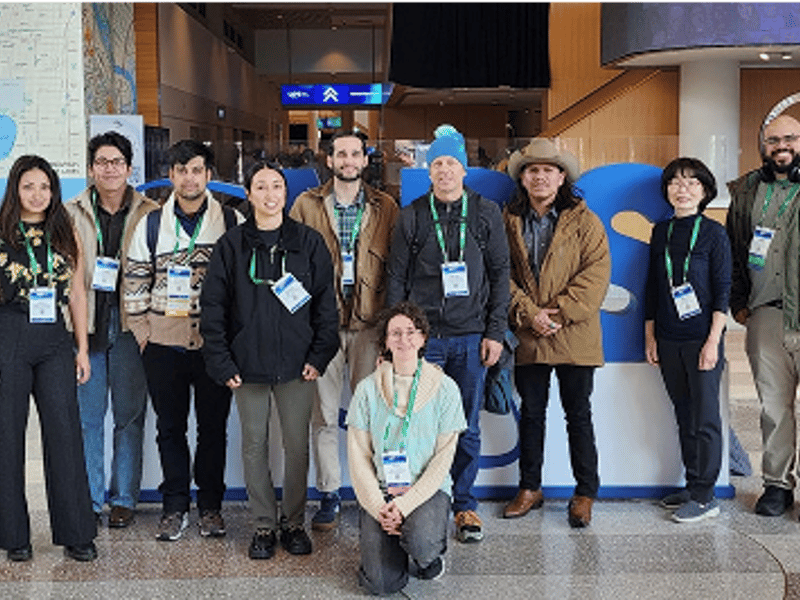
At the CSULB-OSU PREM symposium, students engaged in collaborative, interdisciplinary projects spanning quantum materials, molecular topology, and nanofabrication, supported by reciprocal exchanges and regular joint meetings. We had 21 CSULB summer research projects and 8 CSULB students doing REUs at OSU’s CEM.
Oct 17, 2025
Northern Arizona University
Enhanced active matter photocatalysis via Gold Nanoclusters
J. Martinez and G. Montaño (co-Pls), Northern Arizona University
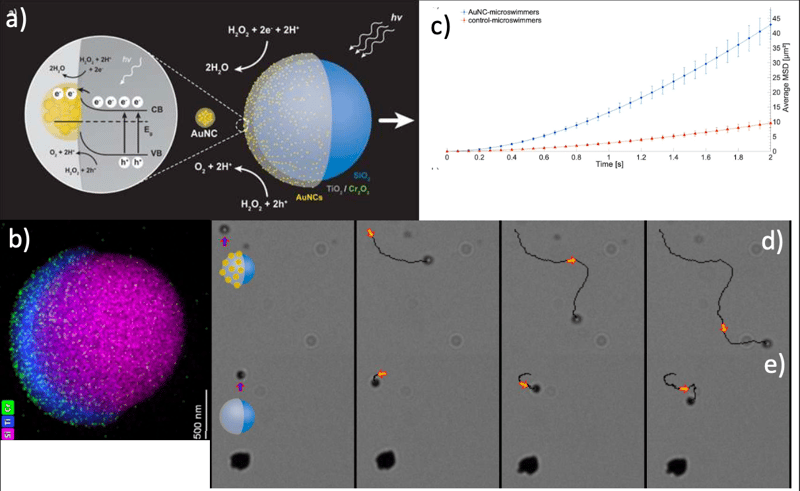
In a paper titled Enhanced active matter photocatalysis via Gold Nanoclusters, researchers show that atomically precise gold nanoclusters can act as motility catalysts for active-matter microswimmers. By exploiting the nanoclusters’ tiny size and controllable optical activity, they achieve nearly fivefold higher mean-square displacement under UV light than conventional TiO2-based microswimmers. The work opens a path to add new functionalities to microswimmers by using the diverse properties of gold nanoclusters.
Jul 31, 2025
Texas State University
Conference Across MRSEC and PREM Schools (CAMPS)
Tania Betancourt, Texas State University
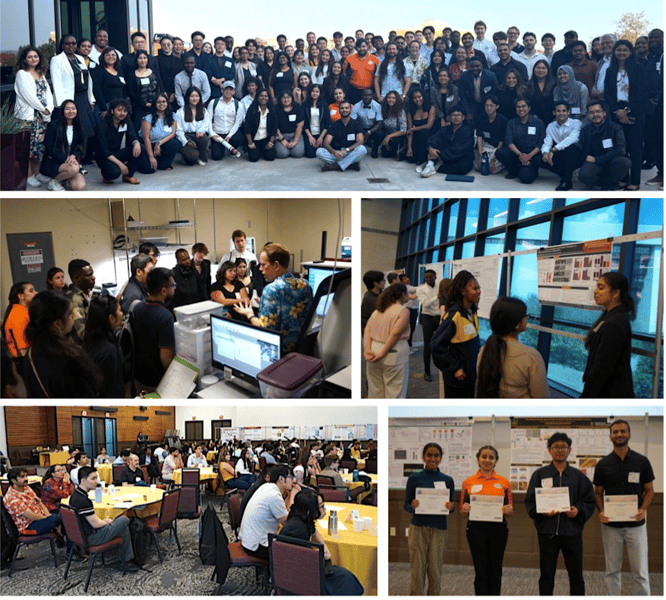
Texas State University hosted the 2025 Conference Across MRSEC and PREM Schools (CAMPS), bringing together 94 students from over 30 universities. The event featured a speaker series with faculty and industry presenters, rapid-fire oral presentations, and poster sessions. Attendees also participated in a career panel, networking lunch, and toured research labs to learn about materials characterization equipment, including electron microscopy tools. The conference aimed to foster collaboration and networking among students and professionals in the field.
Nov 20, 2024
Fort Lewis College
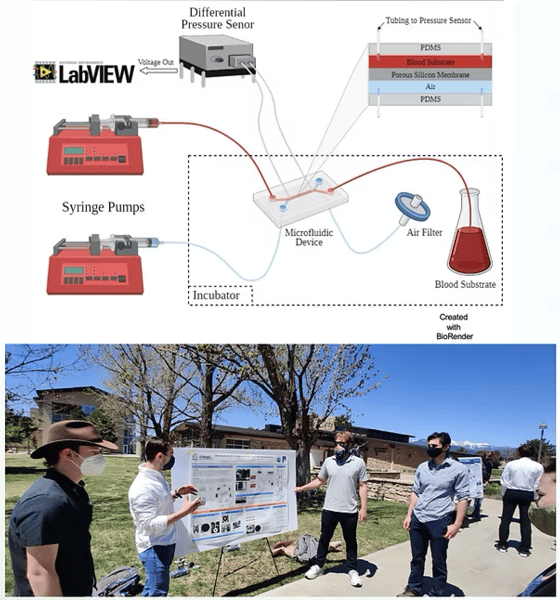
Integration of a Novel Biomembrane into a Lung-on-a-Chip Microfluidic Test-Platform
Jeff Jessing, Fort Lewis College
The Lung-on-a-Chip team at Fort Lewis College developed a novel fabrication method to produce a viable porous silicon biomembrane that mimics the functionality of the human interstitial space that separates the alveolar cells and the capillary cells where the gas exchange occurs in the lungs.
Nov 20, 2024
Fort Lewis College
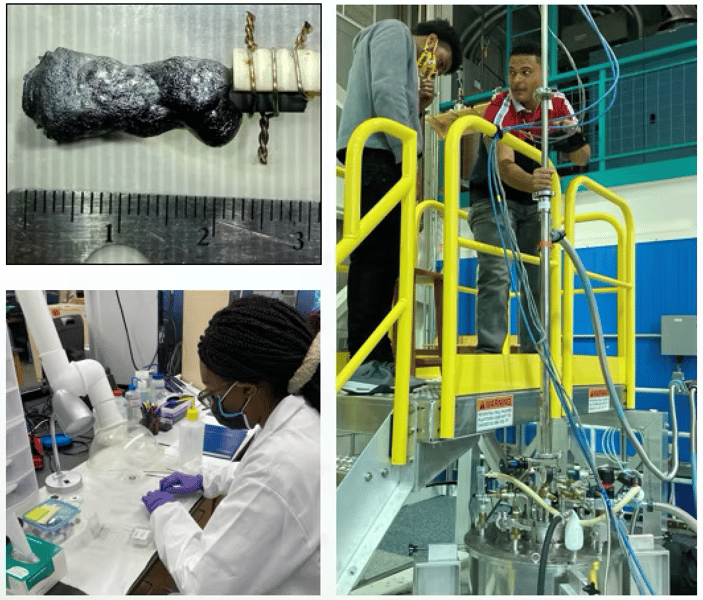
Single Crystal Growth of Quantum Materials
Doyle Temple, Norfolk State University
PEAQS students have begun to grow and characterize more than half a dozen new crystals, including CaFe2 4, Ba-doped CaFe2 4, CuBiz 4, MgCr204, BaFeGaO4, PdGa, and PiGa.
Nov 20, 2024
Fort Lewis College
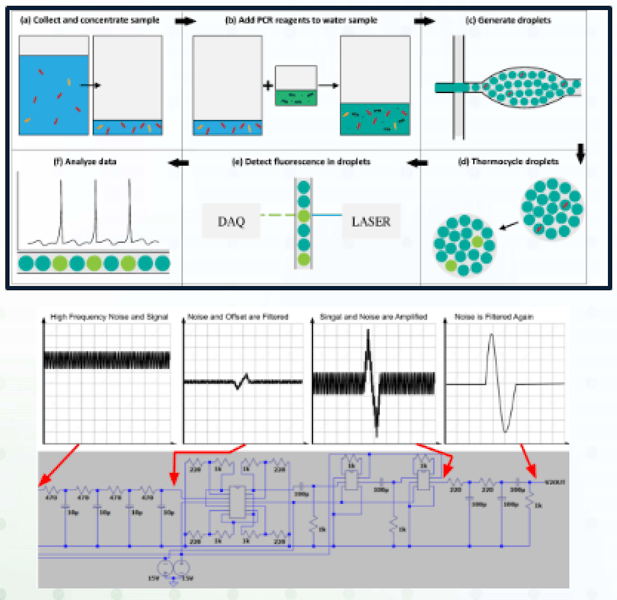
An Optical/Electrical System for Micro Droplet Screening
Yiyan Li, Fort Lewis College
The undergraduate researchers at Fort Lewis College developed a microscope and an optical signal detector circuit to quantify single bacterium in microdroplets from environmental water samples.
Nov 20, 2024
Fort Lewis College
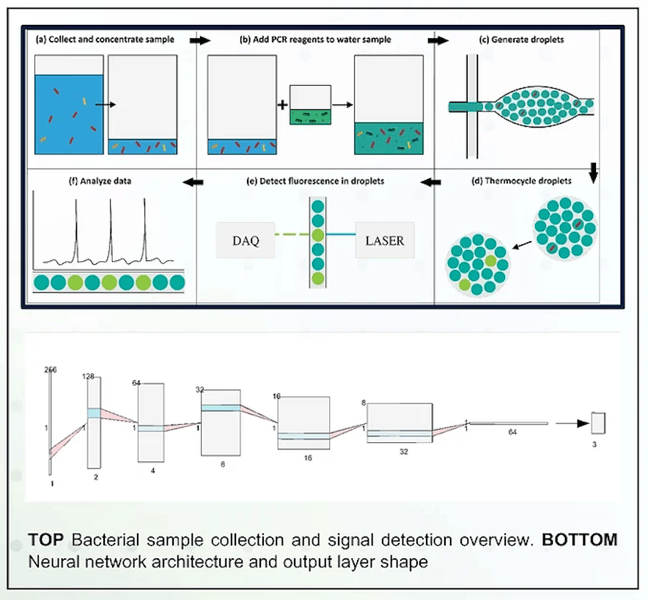
An Optical/Electrical System for Micro Droplet Screening
Yiyan Li, Fort Lewis College
The undergraduate researchers at Fort Lewis College developed an optical system to quantify single bacterium
from environmental water samples. To improve signal detection in their system, they developed a neural network, a method in artificial intelligence.
Apr 11, 2023
University of Central Florida
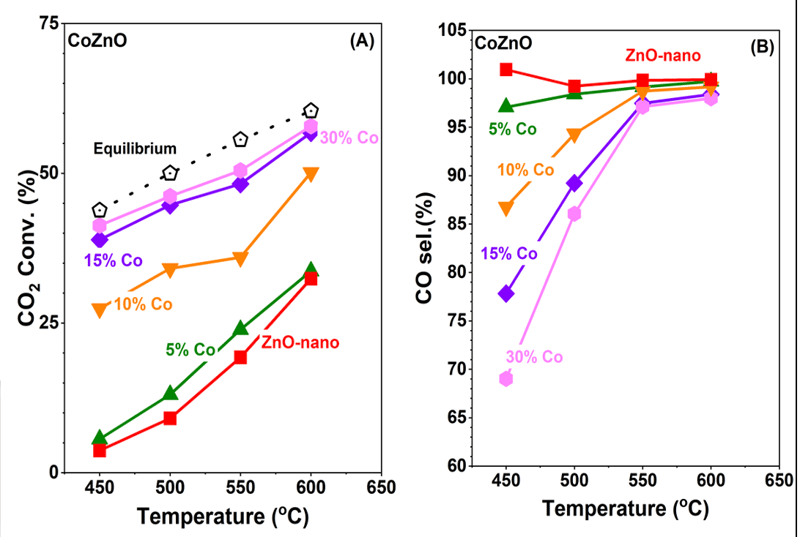
Can magnetic quantum dots be catalysts too? Revisiting Co-doped ZnO nanoparticles for catalysis
Using a method developed by Gamelin Lab at UW in 2003 to study magnetic quantum dots, we synthesize Co-doped ZnO nanoparticles with varying Co atomic % inside ZnO nanoparticles.
Feb 21, 2023
North Carolina A & T State University
Collaborative Research and Education in Energy Materials (CREEM)
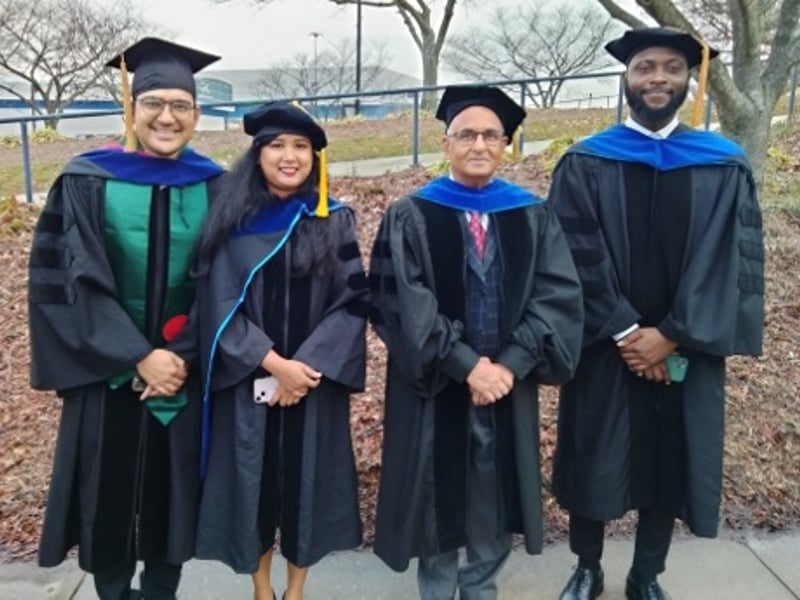
NSF PREM-supported three PhD students graduates in Fall 2022 at NCAT (Fall 2022 NCAT Commencement file photo, December 9, 2022)
Showing 11 to 20 of 182