Explore PREM News and Highlights
Highlight · Feb 14, 2018
University of Texas Rio Grande Valley (formerly UT Pan American) - University of Minnesota MRSEC
UTRGV-UMN Partnership for Fostering Innovation by Bridging Excellence in Research and Student Success
Karen Lozano, The University of Texas Rio Grande Valley
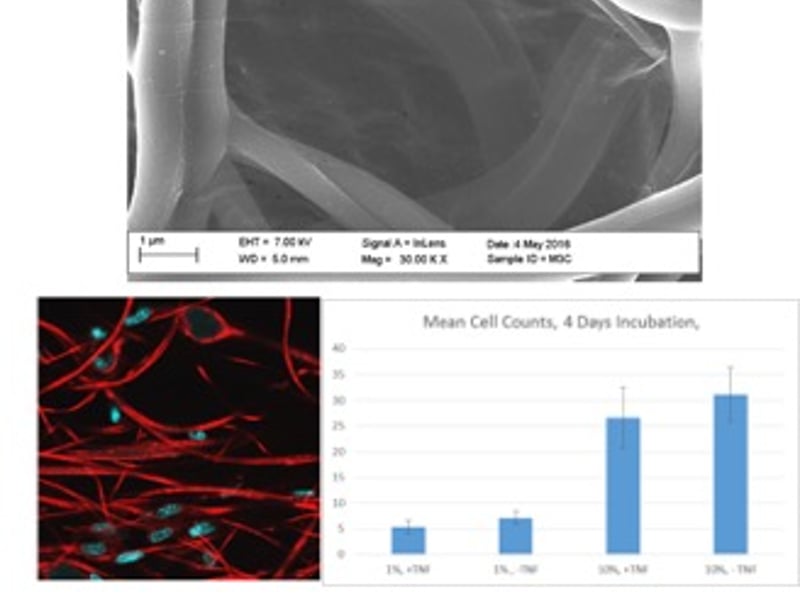
[A] Developed a scalable method to produce graphene-fiber hybrid structures with seamless connections between graphene and fibers. These are produced in situ from aqueous polymer solutions. The surface area and pore diameter of the hybrid structures were measured to be 520 m2g–1 and 10 nm,
Highlight · Feb 14, 2018
California State University - Los Angeles
PREM 2017 Intellectual Merit Highlights
Oscar O. Bernal, California State University L A University Auxiliary Services Inc.
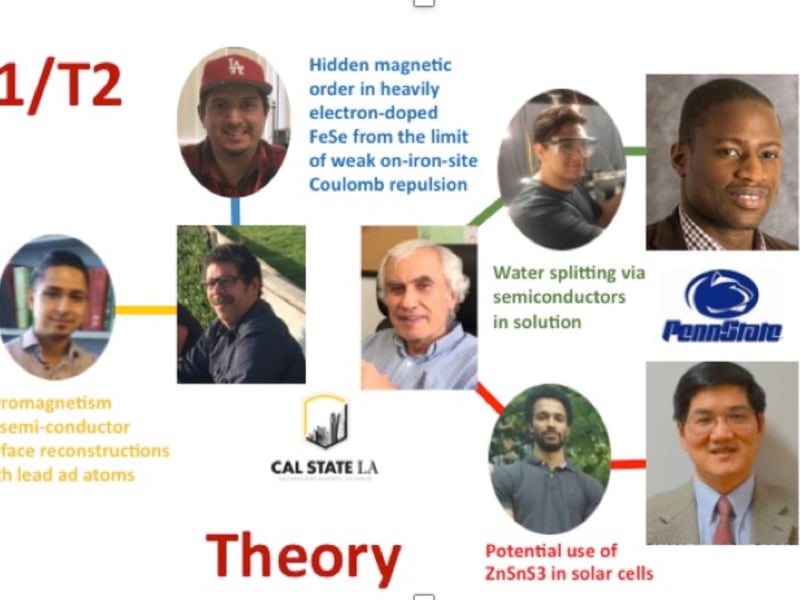
T1: Magnetic and Electric Properties with ApplicationsDesigning methods and devices for efficient mutual control of electricity and magnetismDeveloping low-power consumptionWe designed and fabricated Graphite-fiber reinforced copper composite wires to meet the requirements of wire strength
Highlight · Feb 13, 2018
Jackson State University-University of California, Santa Barbara MRSEC (2012)
3D Nanoarchitecture for Bio-molecular Fingerprinting
Paresh C. Ray, Jackson State University
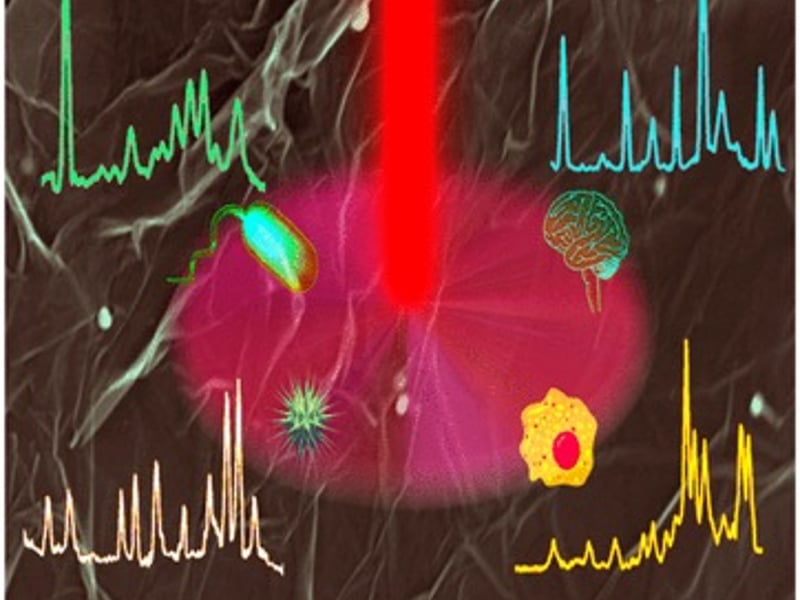
We have developed three-dimensional (3D) nanoachitecture based surface enhnaced Raman spectroscopy (SERS) technology and demonstrated that it can be used for the diagnosis of bacteria, virus, Alzheimer’s disease biomarkers, cancer, explosives and toxic chemicals.Our 3D technology has the c
Highlight · Feb 13, 2018
Charge Stripe Formation in Molecular Ferroelectric Organohalide Perovskites for Efficient Charge Separation
Gang Lu, The California State University Northridge
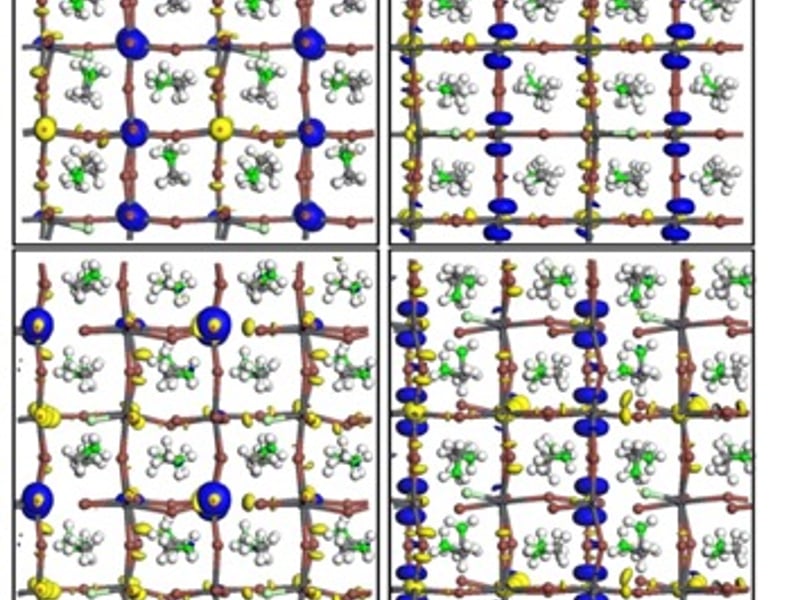
Despite rapid progress in the efficiency of organohalide perovskite based solar cells, physical mechanisms underlying their efficient charge separation and slow charge recombination still elude us. In this work, we provide first direct evidence of spontaneous charge separation via first-pr
Highlight · Feb 13, 2018
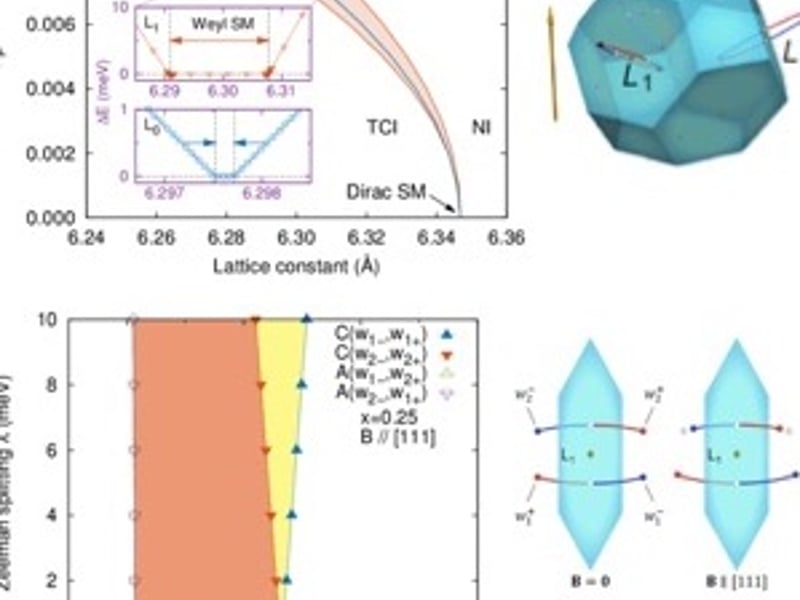
A Pressure-Induced Emergence of a Weyl Semimetal Phase in Pb1-xSnxTe
Gang Lu, The University Corporation, Northridge, DMR 1205734
Outcome: In collaboration with experimental studies at Princeton University we have carried out ab initio calculations to examine the effect of pressure on the topological phase diagram of Pb1-xSnxTe. The calculations reveal that the ferroelectric polarization, which breaks crystal inversi
Highlight · Feb 13, 2018
The University of Texas at El Paso
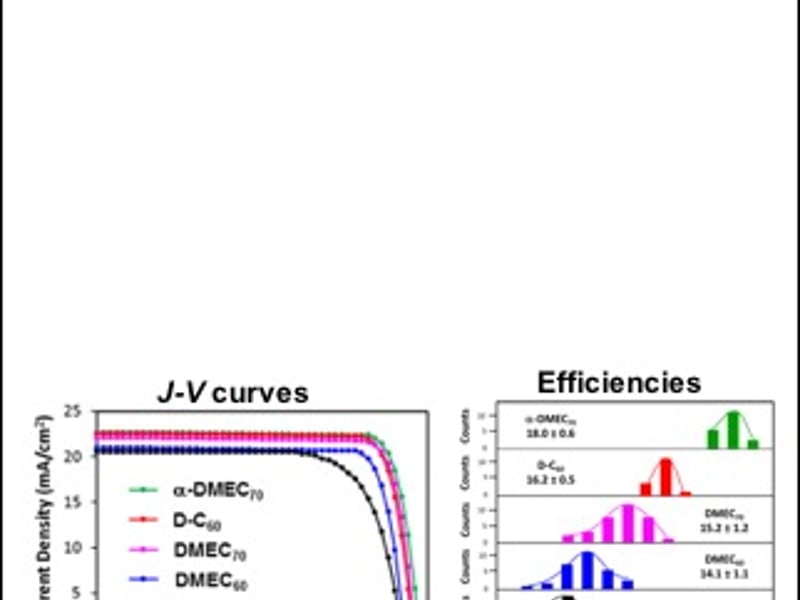
Functionalized Fullerenes for Selective Electron Extraction in Inverted Perovskite Solar Cells
Luis Echegoyen, University of Texas at El Paso
Perovskite solar cells (PSCs), have shown a remarkable increase in photoconversion efficiency (PCE), from 3.8% in 2009, to 22.1% in 2016. The good electron transporting and solution processable properties of fullerene derivatives make them the most popular electron transporting materials

News · Jan 18, 2018
Update on PREM Proposals
PREM proposals MUST follow the NSF 18-1 guidelines that will be available on January 29, 2018.

News · Jan 8, 2018
NSF/DOE Quantum Summer School now accepting applications
The second edition of NSF/DOE Quantum Summer School is now accepting applications. Deadline is January 31st.
News · Dec 18, 2017
Hampton University
PREM Fellow Wins First Place in Poster Competition
Hampton University’s Christopher Johnson presented his research at the Fall MRS Meeting.

News · Dec 5, 2017
Life in Science — Joys, Frustrations and Strategies
Judy Meiksin
Linda S. Sapochak, Division Director for the Division of Materials Research at the National Science Foundation (NSF), presented a very motivating talk where she focused on the joys, frustrations, and inspirations in her life as a materials researcher.
Showing 121 to 130 of 270