Highlights

Donor-Acceptor Binary Organic Compounds – Charge Transfer (CT) Complexes
Aug 2, 2018
New Mexico Highlands University - Ohio State University MRSEC

Donor-Acceptor Binary Organic Compounds – Charge Transfer (CT) Complexes

Tatiana Timofeeva, New Mexico Highlands University
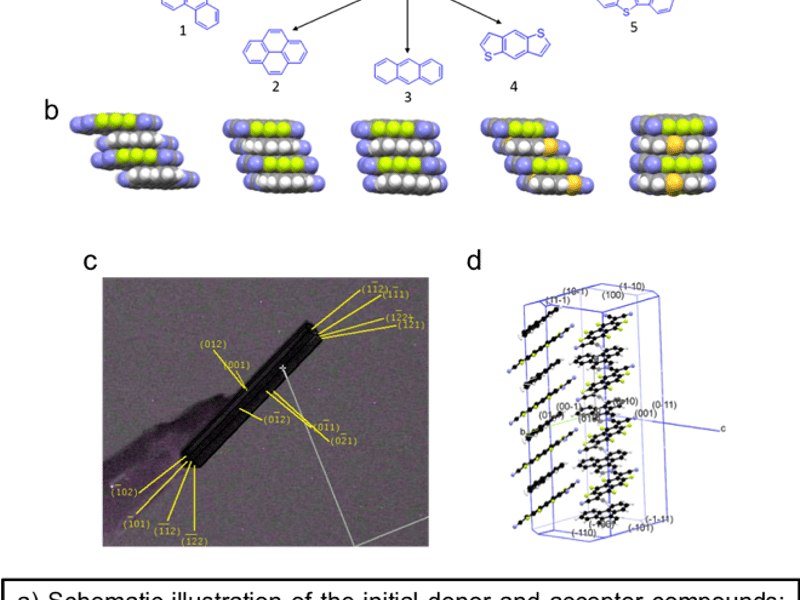
Charge transfer materials are important components of organic electronics for applications in OLED, solar batteries and transistors. Structure-properties relations for this series of materials, including shapes of their crystals, were studied experimentally and computationally in connectio
Machine-Learning Algorithms for Nano-Material Characterization
Aug 2, 2018
New Mexico Highlands University - Ohio State University MRSEC

Machine-Learning Algorithms for Nano-Material Characterization

Gil Gallegos, New Mexico Highlands University
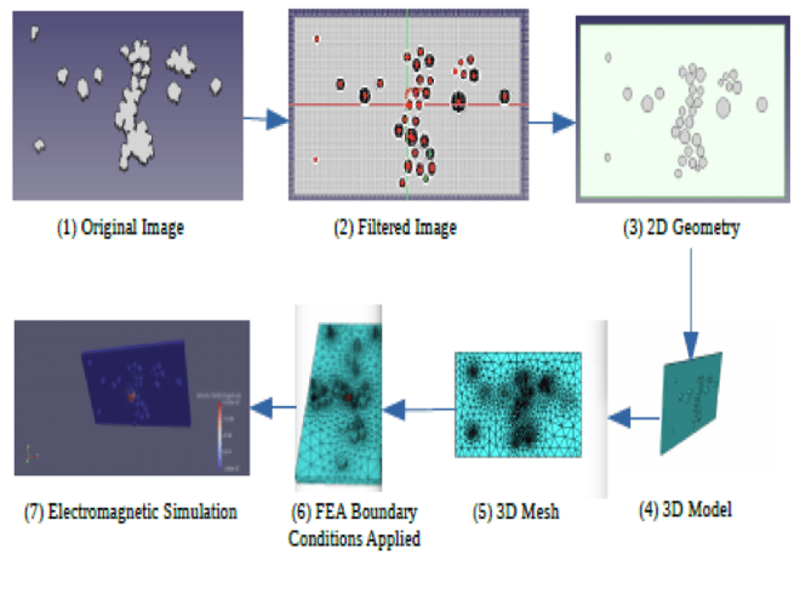
The finite difference-time domain (FDTD) models for clusters of known substrate nano-particle distributions were developed. Additional models utilizing open source finite element analysis (FEA) software (ELMER) and commercial FEA software (COMSOL) were also developed. These models will be
Self-assembling polymer/clay nanocomposites applied to fruit for shelf life extension
Jun 5, 2018
Texas State University, San Marcos-Research Triangle MRSEC

Self-assembling polymer/clay nanocomposites applied to fruit for shelf life extension

Maedeh Dabbaghianamiri, Carlos Corona, G. W. Beall; Materials Science, Engineering, and Commercialization Program, Texas State University  
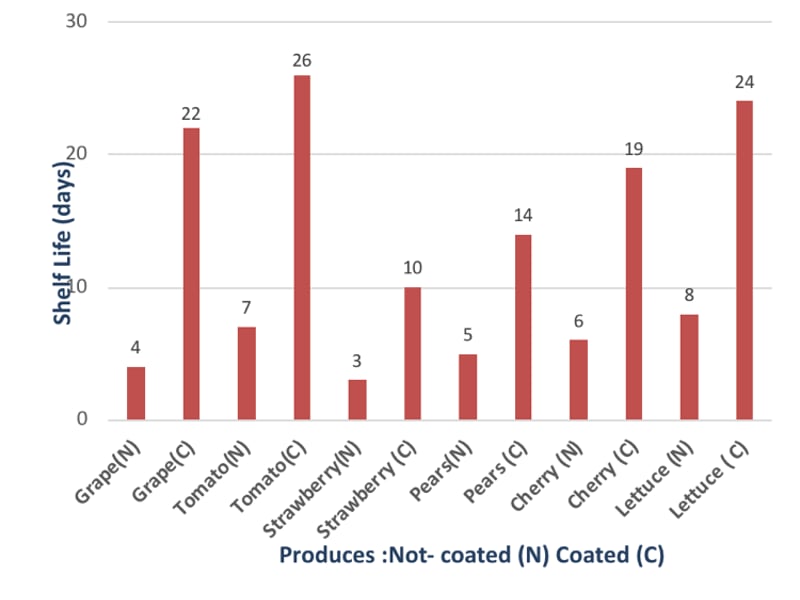
In previous work Texas State University team members  discovered a self-assembling nanocomposite formed between polyvinylpyrrolidone and montmorillonite clay that exhibits high gas barrier properties. This self assembling phenomena has been extended to other polymers including polyvinyl al
Using Iron with Oxide Nanosheets to Enhance Electrochemical Lithium-Ion Charge Storage
Jun 5, 2018
Texas State University, San Marcos-Research Triangle MRSEC

Using Iron with Oxide Nanosheets to Enhance Electrochemical Lithium-Ion Charge Storage

Niu, S.;  McFeron, R.; Godínez-Salomón, F.; Chapman, B.S.; Damin, C.A.; Tracy, J.B.; Augustyn, V.; Rhodes, C.P. Enhanced Electrochemical Lithium-Ion Charge Storage of Iron Oxide Nanosheets, Chemistry of Materials, 2017, 29, 7794-7807  
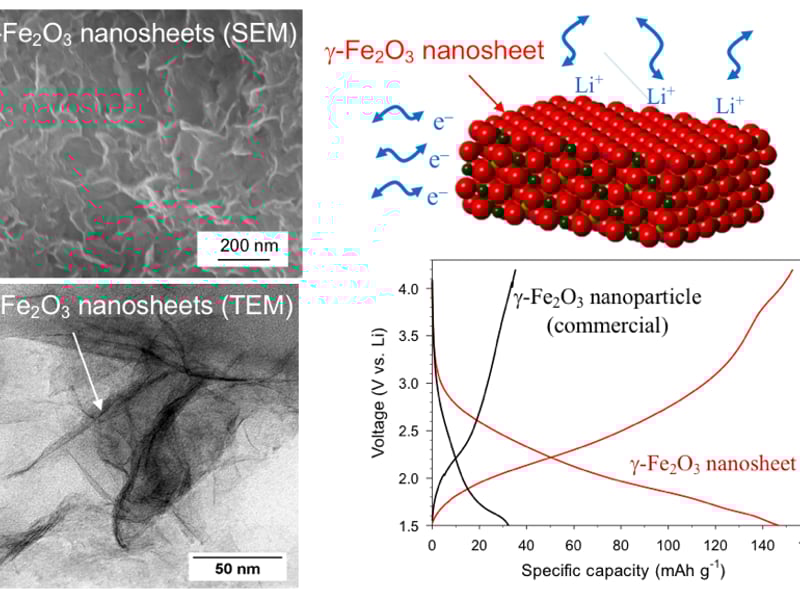
Research at Texas State University (MSI) and MSREC partner NC State demonstrated that iron oxide (g-Fe2O3) could be synthesized as a nanosheet architecture which resulted in significantly higher Li-ion capacities than nanoparticles; this work can provide enhanced cathodes for lower cost Li
New Electron Extraction materials for Inverted Perovskite Solar Cells
May 31, 2018
UTEP-UCSB PREM Center for Energy and Biomaterials

New Electron Extraction materials for Inverted Perovskite Solar Cells

Luis A. Echegoyen (Univesity of Texas at El Paso)
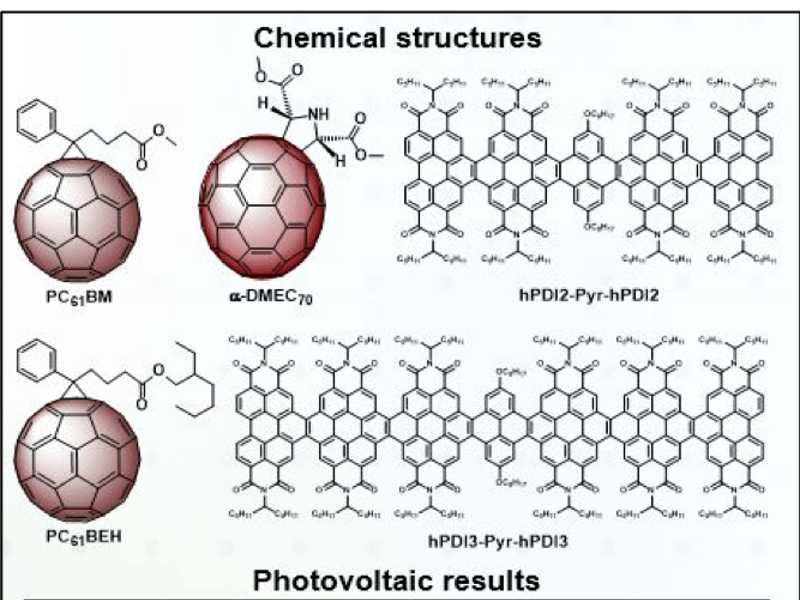
Perovskite solar cells (PSCs), have shown a remarkable increase in photoconversion efficiency (PCE), from 3.8%  in 2009, to 22.1% in 2016. The good electron transporting and solution processable properties of fullerene derivatives make them the most popular electron transporting materials
3D Printing of Multifunctional Composites
May 31, 2018
UTEP-UCSB PREM Center for Energy and Biomaterials

3D Printing of Multifunctional Composites

Yirong Lin (University of Texas at El Paso)
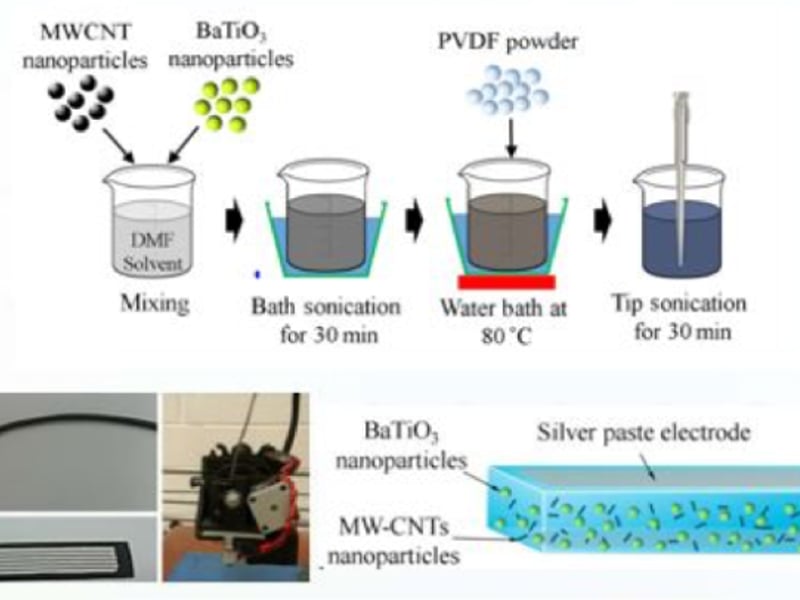
Piezoelectric materials have long been investigated due to their unique characteristic of converting mechanical stress into electrical charges or vice versa.  However they are fragile, difficult to fabricate, and requires post processing. One way to alleviate the drawback is to use 3D prin
How Methylammonium Cations and Chlorine Dopants Heal Defects in Lead Iodide Perovskites
May 29, 2018
Partnership between CSUN and Princeton for Quantum Materials

How Methylammonium Cations and Chlorine Dopants Heal Defects in Lead Iodide Perovskites

Gang Lu (California State University Northridge)  
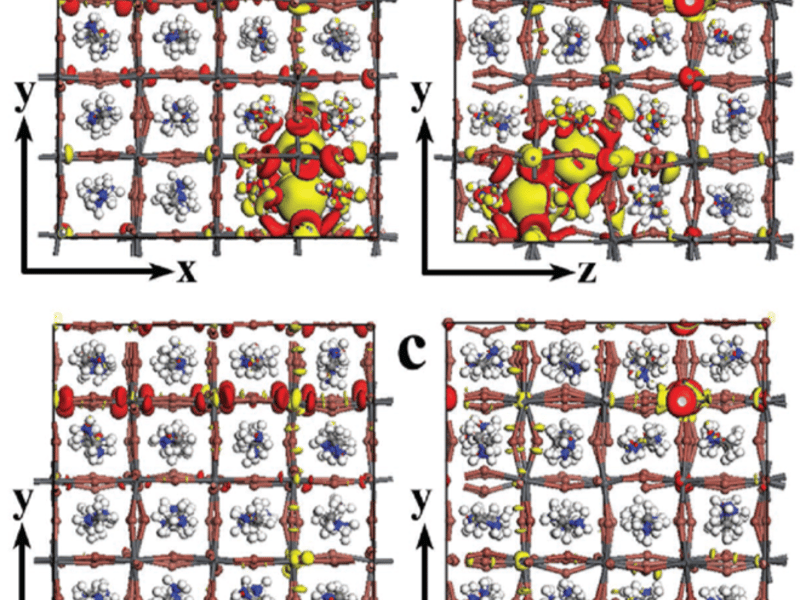
Despite rapid progress in the efficiency of organohalide perovskite based solar cells, physical mechanisms underlying their efficient charge separation and slow charge recombination still elude us.
One-Step Synthesis of Fluorescent Graphene Quantum Dots Through Pyrolysis of Amino Acids
Feb 14, 2018
New Mexico Highlands University - Ohio State University MRSEC

One-Step Synthesis of Fluorescent Graphene Quantum Dots Through Pyrolysis of Amino Acids

Tatiana Timofeeva, New Mexico Highlands University
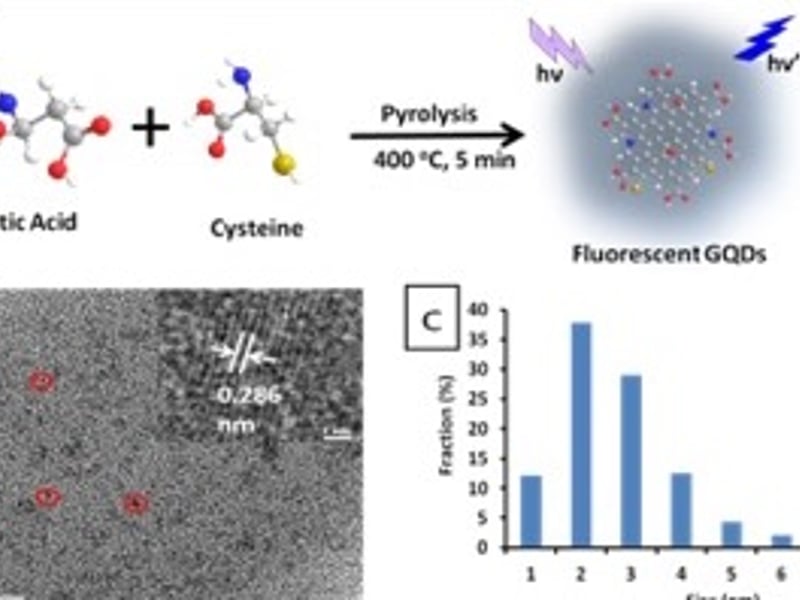
Outcome: We have developed a novel method for the synthesis of graphene quantum dots (GQDs) by using two amino acids, which are non-toxic natural materials containing nitrogen groups for easy surface modification. The synthesis process was easy, efficient and no toxic chemicals were involv
UTRGV-UMN Partnership for Fostering Innovation by Bridging Excellence in Research and Student Success
Feb 14, 2018
University of Texas Rio Grande Valley (formerly UT Pan American) - University of Minnesota MRSEC

UTRGV-UMN Partnership for Fostering Innovation by Bridging Excellence in Research and Student Success

Karen Lozano, The University of Texas Rio Grande Valley

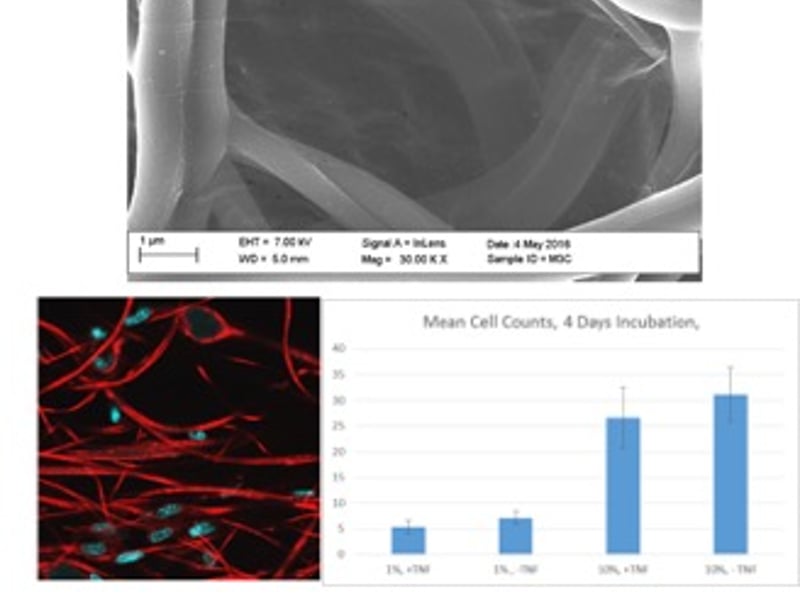
[A] Developed a scalable method to produce graphene-fiber hybrid structures with seamless connections between graphene and fibers. These are produced in situ from aqueous polymer solutions. The surface area and pore diameter of the hybrid structures were measured to be 520 m2g–1 and 10 nm,
PREM 2017 Intellectual Merit Highlights
Feb 14, 2018
California State University, Los Angeles - Penn State University MRSEC

PREM 2017 Intellectual Merit Highlights

Oscar O. Bernal, California State University L A University Auxiliary Services Inc.

T1: Magnetic and Electric Properties with ApplicationsDesigning methods and devices for efficient mutual control of electricity and magnetismDeveloping low-power consumptionWe designed and fabricated Graphite-fiber reinforced copper composite wires to meet the requirements of wire strength