Three demonstrations of sublimation, the change from a solid straight to a gas.
What to do
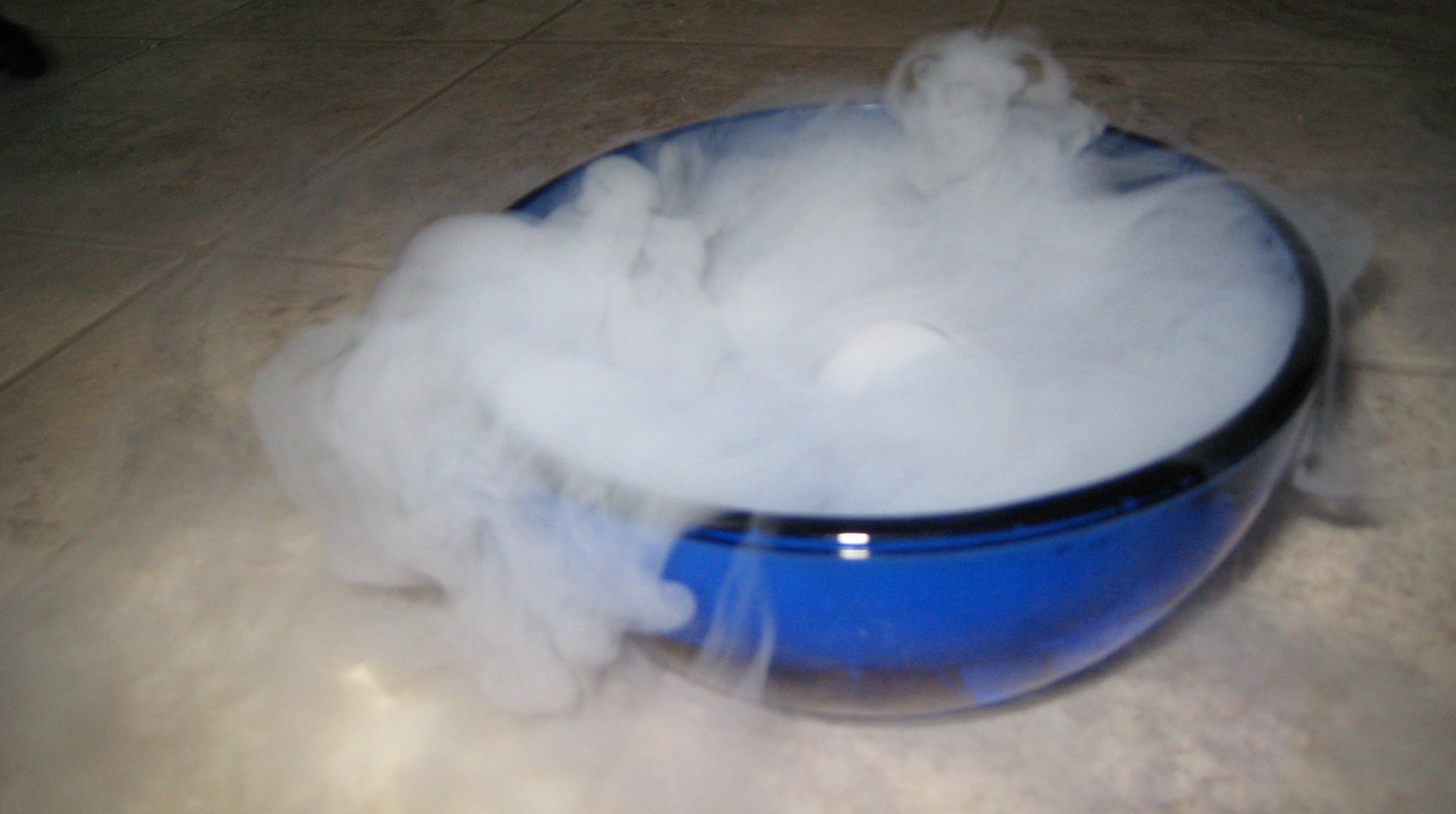
Put a piece of dry ice in a bowl of room-temperature water. It makes a thick, smoke-like fog.
Stir dish soap into a second bowl of room-temperature water, then add a piece of dry ice. The carbon dioxide fills the soap and makes bubbles.
Use a funnel to drop one to three pieces of dry ice into a balloon, then tie it. The balloon inflates.
What is happening
Dry ice is carbon dioxide frozen under high pressure. At normal atmospheric pressure it sublimates at -78.5 C instead of melting. It would only melt if the pressure stayed much higher than atmospheric. Room-temperature water speeds the sublimation up, which is what makes the fog.
Safety
Dry ice is -78.5 C (-109 F), cold enough to cause frostbite burns. Do not handle it with bare hands. Use an insulated glove or tongs. Work somewhere with good ventilation, because dry ice releases carbon dioxide as it sublimates.
 Download