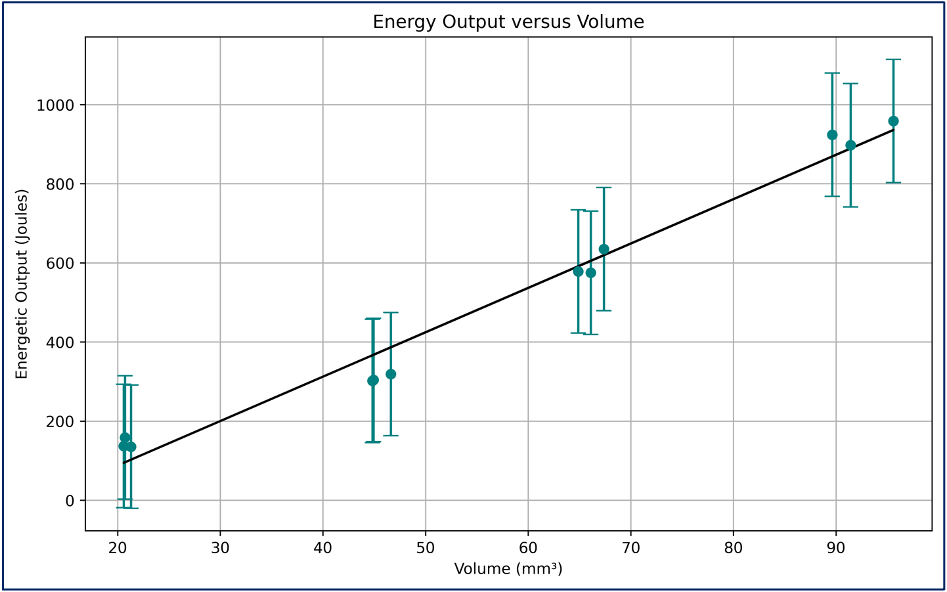
Modern spacecraft requires the ability to perform complex and precise operations such as formation flying and collision avoidance. Microthruster technology, a key development in propulsion for spacecraft, address these performance needs through enhanced maneuverability while maintaining a minimal footprint. Solid propellant microthruster (SPM) technology is not currently used, but is advantageous due to its minimal power consumption, compact design, and high energy densities, which enable accurate thrust control. The Jessing lab investigated the use of porous silicon (PSi) as a high energy density material for microthruster applications. Students fabricated PSi integrated with a combustible sodium perchlorate and developed methods to test the energy output and thrust of this system. They successfully demonstrated this system is a high energy density material with precise thrust control.
 Download

Partnership for Education and Advancement of Quantum and nano-Sciences (PEAQS)
This initiative aims to advance cutting-edge materials science while leveraging expertise in nanoscale synthesis, characterization, and device integration. PEAQS addresses challenges in nanotherapeutics, nanoelectronics, and thermoelectrics.